Navigating the Verse: Using Star Maps and Jump Points for Strategic Advantage
Master Star Citizen navigation with this comprehensive guide to star maps, jump points, and route planning. Learn efficient travel strategies and gain…
As Star Citizen expands beyond Stanton into Pyro, Nyx, and eventually dozens of star systems, navigation becomes a critical organizational skill. Knowing the fastest routes, safest paths, and strategic chokepoints gives your org a decisive advantage. Here's your guide to mastering navigation in the verse.
Understanding Star Systems
Each system has unique characteristics:
Stanton System:
- UEE-controlled corporate space
- Four major planets with extensive infrastructure
- Well-mapped and heavily trafficked
- Safe for most operations
- Primary economic hub
Pyro System:
- Lawless, no UEE presence
- Volatile flare star creates hazards
- Five planets with scattered outlaw settlements
- Ruin Station is the main hub
- High risk, high reward
Nyx System:
- Largely uninhabited
- Home to Delamar asteroid and Levski
- Three planets, minimal infrastructure
- Refuge for independents
- Strategic position between systems
Future Systems:
- Terra: Second major UEE hub
- Magnus: Military and industrial
- Castra: Border system
- Ellis: Racing and tourism
- And dozens more on the star map
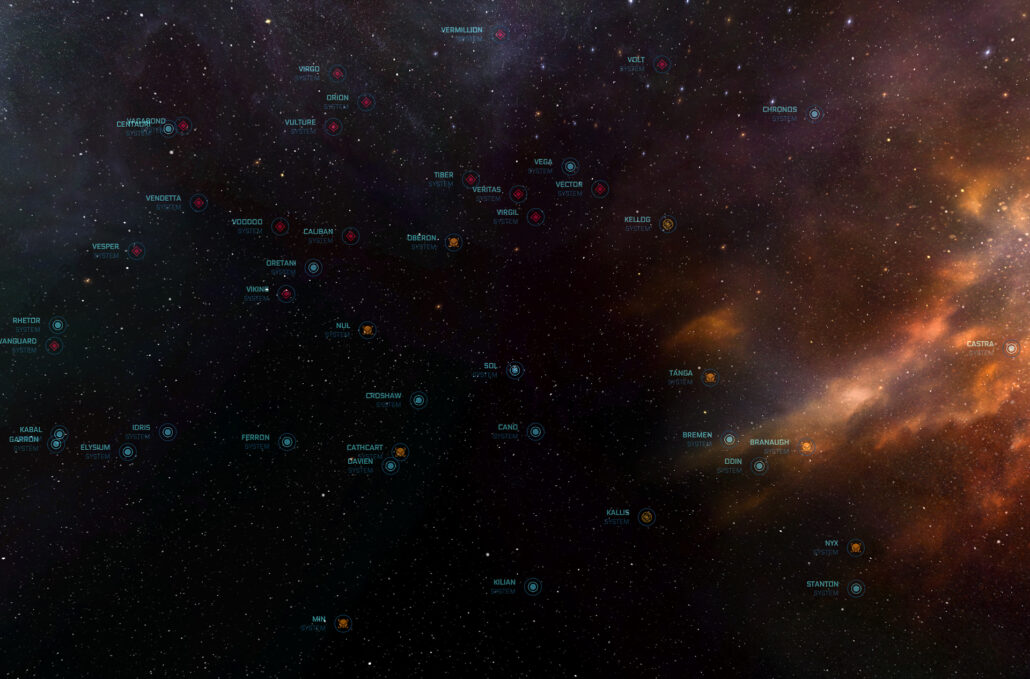
Use SCORG's interactive star map to explore all known systems and plan your operations.
Jump Points: The Highway Between Stars
Jump points connect star systems:
Jump Point Types:
- Large: Capital ships can traverse (rare)
- Medium: Most ships can use
- Small: Only small ships fit through
Jump Point Mechanics:
- Must be discovered through exploration
- Navigation requires skill and attention
- Turbulence and hazards during transit
- Ships can be damaged by poor navigation
- Transit time varies by jump point size
Strategic Importance:
- Control of jump points = control of access
- Chokepoints for defense or ambush
- Trade routes depend on jump point locations
- Military strategy revolves around jump access
- Intelligence on jump point status is valuable
Route Planning
Efficient routes save time and reduce risk:
Factors to Consider:
- Distance and quantum travel time
- Number of jump points required
- Safety of intermediate systems
- Fuel consumption and refueling stops
- Cargo value vs. route risk
Route Types:
- Direct: Fastest but may cross dangerous space
- Safe: Longer but through secure systems
- Covert: Avoids detection, uses less-traveled paths
- Economic: Optimized for trading profit per hour
- Military: Prioritizes tactical advantage
Planning Tools:
- SCORG's star map for visual route planning
- Distance calculators for fuel estimation
- Threat assessment for each waypoint
- Alternative routes for contingencies
- Timing estimates for operation planning
Quantum Travel Optimization
Make the most of in-system travel:
Quantum Drive Selection:
- Speed vs. fuel efficiency tradeoff
- Military drives: Fast but fuel-hungry
- Industrial drives: Efficient but slower
- Competition drives: Fastest, least efficient
- Match drive to mission requirements
Travel Tips:
- Plot routes through intermediate points
- Avoid direct paths through known ambush zones
- Use moons and stations as waypoints
- Quantum calibration time varies by distance
- Interdiction is possible — be prepared
Fuel Management:
- Know your ship's quantum fuel capacity
- Plan refueling stops for long journeys
- Carry hydrogen fuel for emergencies
- Starfarer support for fleet operations
- Never operate on minimum fuel reserves
Navigation for Fleet Operations
Coordinating fleet movement:
Fleet Quantum Travel:
- Designate navigation lead
- All ships quantum to same target
- Stagger arrivals to avoid clustering
- Regroup at waypoints before proceeding
- Have stragglers catch up at rally points
Convoy Procedures:
- Scouts ahead of main body
- Escorts flanking cargo ships
- Rear guard watching for pursuit
- Communication at each waypoint
- Emergency scatter procedures
Formation Travel:
- Maintain formation during quantum
- Reform at each destination
- Account for different quantum speeds
- Slower ships may need head start
- Coordinate arrival timing
Strategic Navigation
Use geography for advantage:
Chokepoint Control:
- Identify natural chokepoints (jump points, asteroid fields)
- Position forces to control access
- Monitor traffic through key routes
- Establish early warning at approaches
- Deny enemy use of critical paths
Terrain Advantage:
- Use asteroid fields for cover
- Hide in gas giant atmospheres
- Position near stations for quick resupply
- Use planetary gravity wells tactically
- Exploit sensor shadows
Intelligence Gathering:
- Map enemy patrol routes
- Monitor jump point traffic
- Track rival org movements
- Share intelligence with allies
- Update maps with new discoveries
Exploration and Discovery
Expand your org's knowledge:
Systematic Exploration:
- Assign sectors to exploration teams
- Document all discoveries
- Map resource locations
- Identify potential base sites
- Record hazards and threats
Jump Point Discovery:
- Dedicated exploration ships (315p, Carrack)
- Systematic scanning of system edges
- Document jump point characteristics
- Test navigation routes
- Share discoveries with org (not public!)
Value of Knowledge:
- Undiscovered routes provide strategic advantage
- Resource locations are valuable intelligence
- Base site knowledge is competitive advantage
- Navigation data can be traded
- First-mover advantage in new systems
Navigation Safety
Stay safe while traveling:
Pre-Flight Checklist:
- Fuel levels adequate for planned route
- Quantum drive functional
- Shields and weapons ready
- Communication systems tested
- Route planned with alternatives
During Travel:
- Monitor radar for contacts
- Be ready for interdiction
- Keep shields up in dangerous areas
- Maintain communication with org
- Report unusual activity
Emergency Procedures:
- Interdiction: Fight or flee decision
- Fuel emergency: Nearest refueling point
- Ship damage: Nearest repair facility
- Lost: Use star map to reorient
- Ambush: Execute pre-planned escape route
Building an Org Navigation Database
Knowledge is power:
What to Record:
- Quantum travel times between locations
- Fuel consumption for common routes
- Threat levels along routes
- Refueling and repair stop locations
- Jump point locations and characteristics
Sharing Knowledge:
- Centralized database in SCORG
- Regular updates from exploration teams
- Classified information for sensitive routes
- Training materials for new members
- Alliance sharing for mutual benefit
Keeping Current:
- Game updates change the map
- New systems and jump points added
- Threat levels change over time
- Infrastructure develops
- Regular review and updates
Conclusion
Navigation in Star Citizen is more than getting from A to B — it's a strategic skill that impacts every aspect of organizational gameplay. By mastering star maps, understanding jump points, planning efficient routes, and building a knowledge database, your organization gains advantages that translate directly into operational success.
The verse is vast and growing. Those who know it best will dominate it.
Fly smart, citizens. The stars are waiting.